Are Pokémon Gold Star Cards Worth Money? What the EX-Era Chase Is Worth
Pokémon Gold Star cards are the EX-era chase, and the data shows there are no cheap ones. Here is what all 25 are worth, why they beat a normal holo, and how to value yours.
In this guide
If you have a Pokemon card with a small gold star next to the name, here is the good news up front: unlike almost every other "rare-looking" card, there is basically no such thing as a cheap Gold Star. They were the chase of the EX era, and twenty years on the data shows the whole rarity still carries real money.
What a Gold Star actually is
Gold Stars ran through the EX era, roughly 2004 to 2007. Each one has a gold star printed by the Pokemon's name, shows the Pokemon in a shiny alternate colour, and was printed at a fraction of a normal holo's run. Only 25 were ever made, spread across 9 sets. That scarcity by design is exactly why they behave differently from an ordinary rare: there were never many, and there will never be more.
There are no cheap Gold Stars
We priced all 25 in near-mint and compared each one to an ordinary Rare Holo from the very same booster series. The typical Gold Star trades at a median of €838, about 28x an ordinary holo from the same sets (around €30). And the floor matters most here: even the cheapest Gold Star of the entire rarity, Regirock at €428, still clears a same-era holo many times over. The full ranking is in the Gold Star premium study. It is genuinely unusual to be able to say this about any rarity, so if your card wears the gold star, it is almost certainly worth chasing down the exact value.
The chase Gold Stars
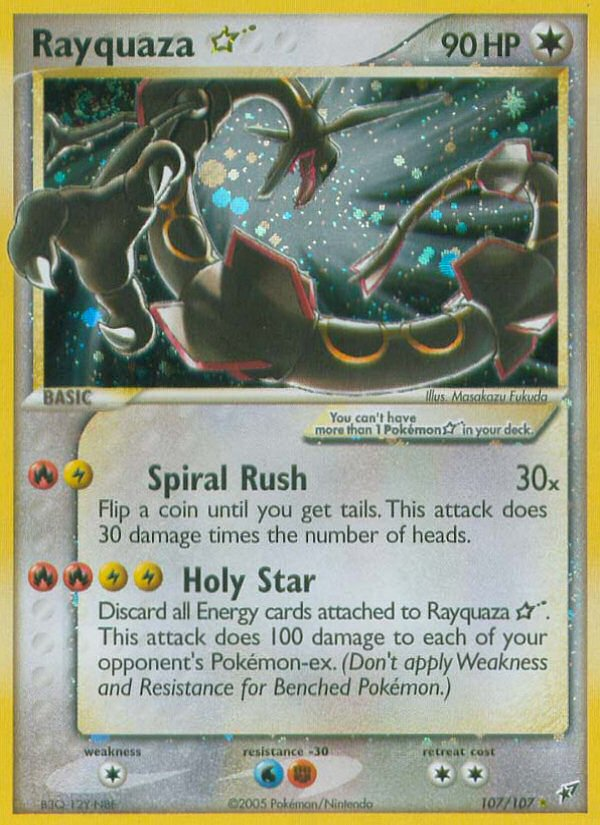
The top of the market is steep. The priciest is Rayquaza ★ from Deoxys at around €3,519, followed by Mudkip ★ and Torchic ★ from Team Rocket Returns, both over €2,000. The famous Charizard δ from Dragon Frontiers sits right on the €838 median, a reminder that even the "middle" Gold Star is a serious card. One caution: these are near-mint reference prices, and graded gem-mint copies sell for multiples more, which is exactly the kind of vintage card where grading can be worth it. High value also attracts fakes and altered cards, so authenticity matters as much as condition.
Why a Gold Star beats a normal holo
Same packs, same years, same holofoil stock. The only thing that changed is the rarity treatment, and the market pays 28x for it. Scarce by design, plus a beloved shiny alternate-colour Pokemon that collectors specifically hunt, is the exact recipe for a durable premium. It is the same brand-and-demand logic that makes a Charizard cost more than its rivals, concentrated into a 25-card rarity where every single card is scarce.
How to value your Gold Star
- Pin the exact card: which Pokemon, which of the 9 EX-era sets, and confirm the gold star sits by the name.
- Filter to English, Near Mint or better. Condition swings the price hugely on cards this old.
- Average the four lowest current offers for that exact card. That is what it genuinely sells for.
That is the method from what's my Pokémon card worth, applied to a Gold Star. To identify the exact card and pull its live value fast, scan a card →.
Selling a Gold Star
Vintage buyers are careful, so a precise, honest listing wins. Name the exact Pokemon, set and condition, price the right market, and open a free shop and list your cards → with no marketplace fee. Because these are high-value cards, ship it safely so it arrives in the grade you sold.