First Edition vs Unlimited: Is the 1st Edition Stamp Worth It?
The same vintage Pokemon card, same art, same condition, one tiny Edition 1 stamp. Here is exactly what that stamp is worth across the WOTC sets, from real market data.
In this guide
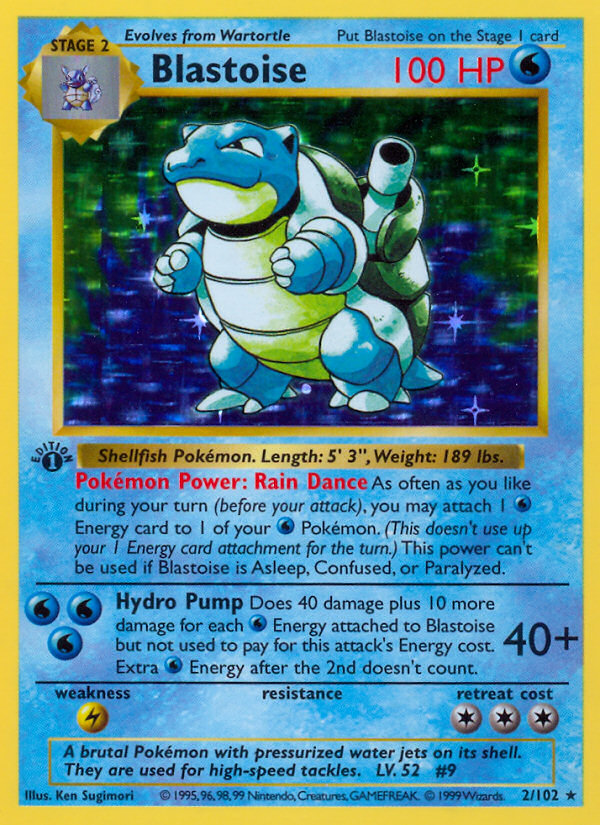
For old-school Pokemon, one of the first questions on any card is whether it is 1st Edition. The same card, the same art, the same raw condition, and the only difference is a small "Edition 1" stamp on the left. That stamp alone changes the price, and the data shows by exactly how much.
What the stamp is actually worth
We matched 151 WOTC-era cards that exist with both a 1st Edition and an Unlimited market price. The typical 1st Edition card trades at a median of 2.31x its identical Unlimited version, and 24% of the cards command 3x or more in 1st Edition. It varies by set, from a median 1.81x on Neo Revelation up to 2.68x on Neo Genesis, with Jungle, Gym Heroes and Neo Discovery around 2.62x. The full ranking is in the first edition tax study.
So as a rule of thumb for vintage WOTC cards: 1st Edition is worth roughly double the Unlimited copy, and for a meaningful share of cards, considerably more.
Why 1st Edition commands a premium
1st Edition cards were the very first print run of a set, produced in smaller numbers before the larger Unlimited run, and they carry the stamp that proves it. Fewer copies plus a clear marker that collectors specifically hunt equals a durable premium. It is the same scarcity-plus-demand logic that drives every premium in the hobby, just expressed as a stamp instead of a finish or an alternate art.
How to spot it, and one caution
The 1st Edition stamp is a small black "Edition 1" badge on the lower left of the card art (WOTC era). Check it against the exact set, because the premium is set-specific. For a full visual walk-through of finding and verifying the stamp, see how to tell if a Pokemon card is first edition. Two cautions on vintage: condition matters even more than usual (these are 20-plus years old, and the market prices from Near Mint down), and authenticity matters, because valuable vintage attracts fakes and trimmed cards. If a 1st Edition card is worth real money, that is exactly where grading earns its fee, covered in is grading worth it.
Value your card properly
- Confirm it is 1st Edition (the stamp) and pin the exact set and number.
- Filter to English, Near Mint or better, on the 1st Edition listing specifically.
- Average the four lowest current offers. That is the live 1st Edition price, separate from the Unlimited one.
That method is covered in what's my trading card worth; to identify the exact printing fast, scan a card →. And keep perspective on the rest of the binder: our price census of 337,175 cards found the median card is worth about $0.45, so the 1st Edition premium matters most on cards that already have value.
Selling vintage
Vintage buyers are careful, so a clean, honest listing wins. State 1st Edition vs Unlimited exactly, grade the condition honestly, and price the correct market. Then open a free shop and list your cards →, no marketplace fee, and pack a valuable vintage card for its worth.